
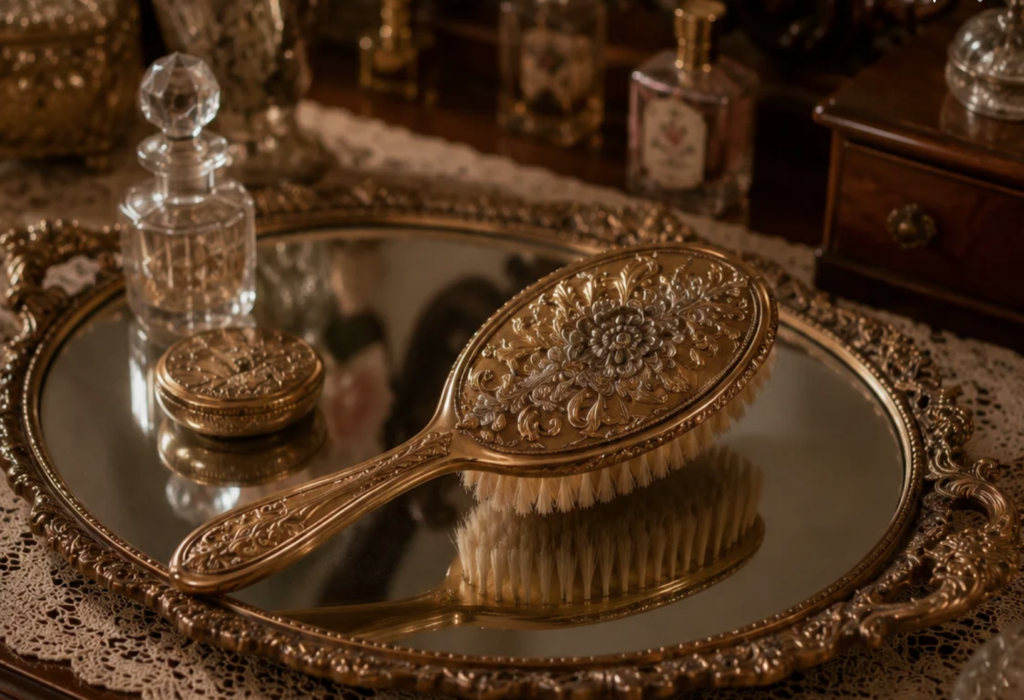
Picture this:
The dishes are done.
The house is finally quiet.
A soft lamp glows beside a vanity mirror.
A woman sits down, removes the pins from her hair, takes a long, calming deep breath and begins brushing.
One stroke.
Two.
Ten.
Fifty.
One hundred.
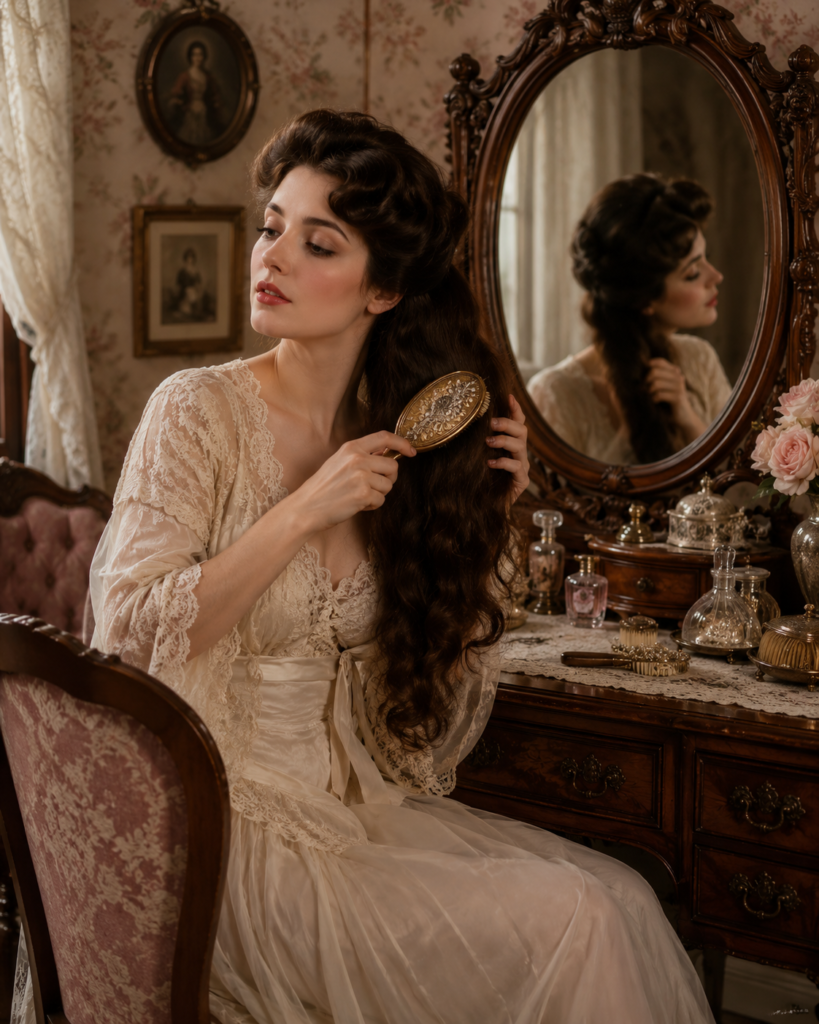
For generations, women were told to brush their hair 100 times every night before bed. It sounds oddly specific now, like one of those old-fashioned rules filed somewhere between “don’t wear white after Labor Day” and “never leave the house without lipstick.”
But like many vintage beauty rituals, there was more to it than vanity.
And despite what modern hair experts might tell you, this old routine wasn’t completely without merit.
✧ Where did the “100 brush strokes” idea come from?
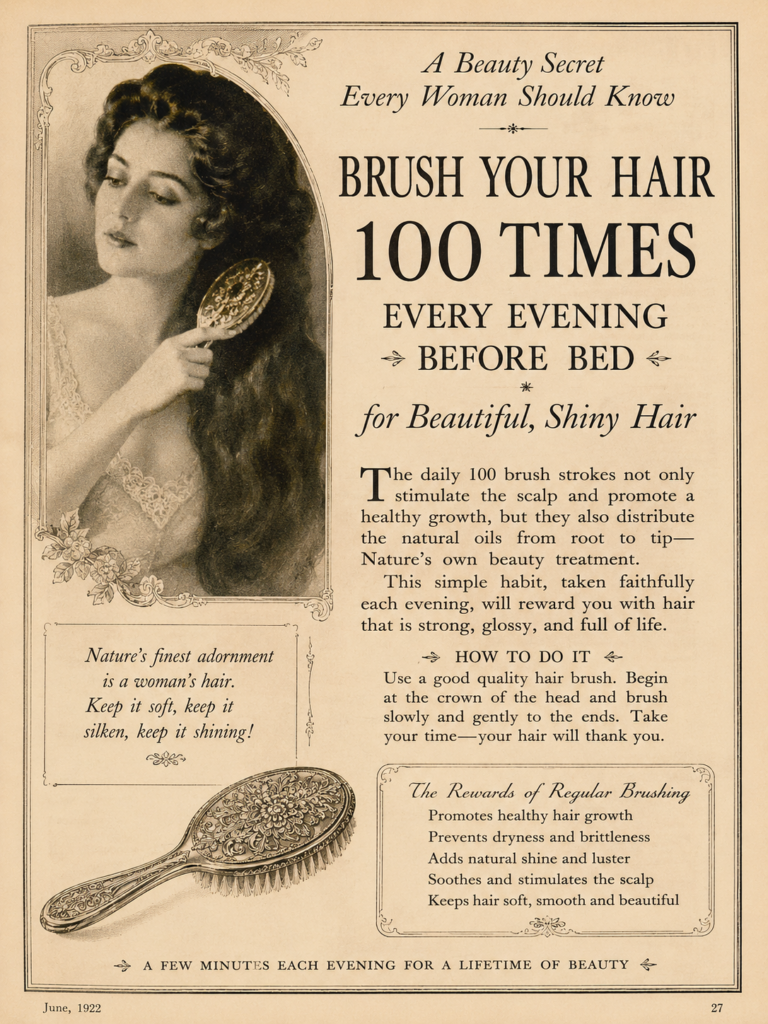
The exact origin is a little fuzzy, but the advice became incredibly popular during the late 19th and early 20th centuries and continued well into the mid-century beauty era.
Beauty manuals, etiquette guides, magazine columns and mothers passed it down like a sacred little rule:
“Brush your hair 100 strokes every night for beautiful hair.”
Simple. Memorable. Very specific.
That number may have been part beauty advice and part ritual. Because humans love a number with ceremony attached to it.
✧ So…did it actually do anything?
Surprisingly: yes.
Hair brushing does serve a real purpose.
Your scalp naturally produces oils called sebum. These oils are made near the roots and help condition and protect the hair shaft.
Before modern leave-ins, serums, oils, and shine sprays, brushing helped distribute those oils from scalp to ends.
In theory, regular brushing could:
- Spread natural oils more evenly
- Help smooth the hair cuticle
- Remove dust and debris
- Reduce tangling
- Add visible shine
If you’ve ever brushed your hair and immediately thought:
“Wait… why does it suddenly look healthier?”
That’s part of what people were noticing.
✧ Where modern hair science steps in
The old advice wasn’t wrong.
It just may not be right for everyone.
Today, many hair professionals caution that excessive brushing, especially vigorous brushing, can cause:
- Mechanical breakage
- Split ends
- Friction damage
- Stress on delicate hair textures
This is especially true for:
- curly hair
- fragile hair
- chemically treated hair
- fine hair
So no, everyone probably doesn’t need exactly 100 nightly strokes. But a few extra than you’ve been doing might not hurt. Just take your time… and brush gently.
✧ There was another reason women loved it
And this part might be my favorite.
Because the brushing itself wasn’t really the whole point.
It created a pause, and a ritual.
Think about the rhythm of it:
Brush.
Brush.
Brush.
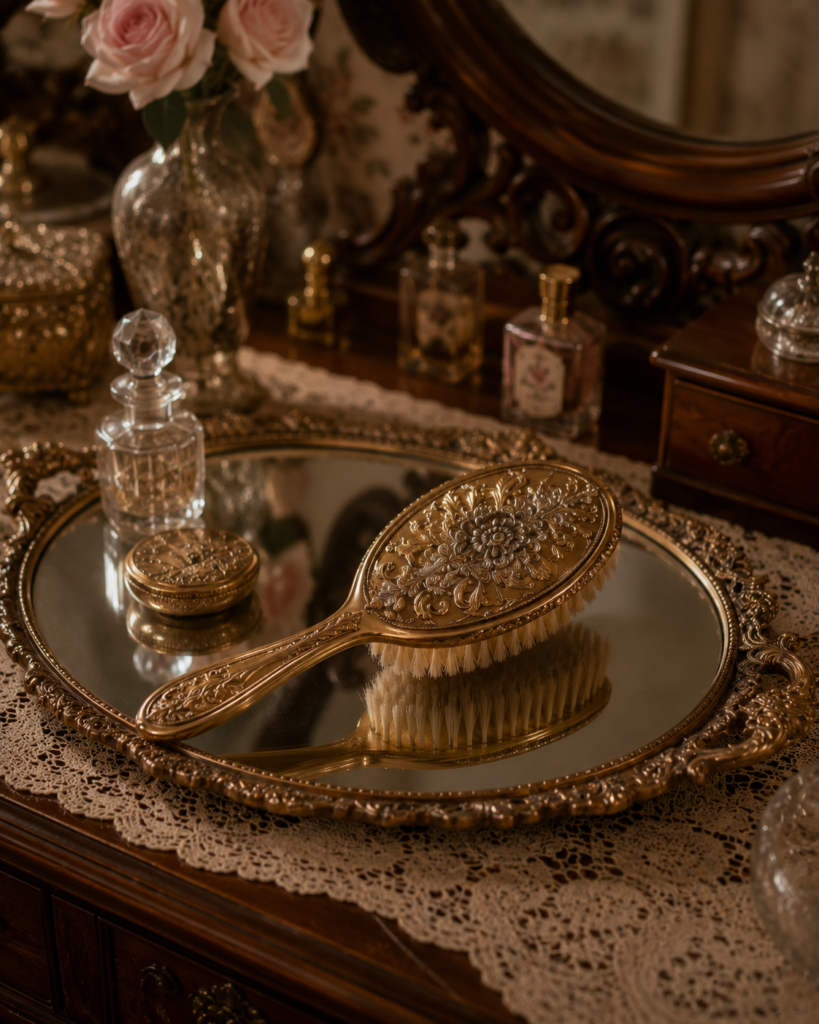
Slow repetition.
No notifications.
No rushing.
No screens.
Just a small nightly act that signaled the day is over now… and now it’s time to take care of me.
Beauty rituals used to create built-in transitions like this.
Cold cream removed the day.
Rollers prepared tomorrow.
Hair brushing marked the shift between public life and private life.
Tiny rituals.
Tiny resets.
✧ The vanity ritual we accidentally lost
The more you look into vintage beauty routines, the more they start feeling less like “tips” and more like tiny ceremonies.
Intentional self-care.
Women sat at vanities. They brushed their hair. Applied cream. Removed makeup. Set curlers.
And many of these routines repeated night after night for years, or even their whole life.
Perhaps that consistency was the most beautiful part.
✧ Should you try it?
Maybe not 100 strokes.
But maybe a few intentional ones. Choose your favorite number below 50 and try it for a week.
Not because your hair desperately needs a mathematically perfect number.
And not because vintage women discovered some hidden beauty code.
But because there’s something oddly calming about repetitive rituals that ask almost nothing from you.
A brush.
A mirror.
A few quiet minutes.
That might have been the real beauty secret all along.
✧ Before You Go…
It’s interesting how many beauty routines used repetition:
100 brush strokes.
Rollers every night.
Cold cream before bed.
Almost like old beauty advice wasn’t just about appearance.
It was about rhythm, and ritual.
But that’s a story for another vanity chat. ✨